Use the concept of 4C to improve your story telling skills
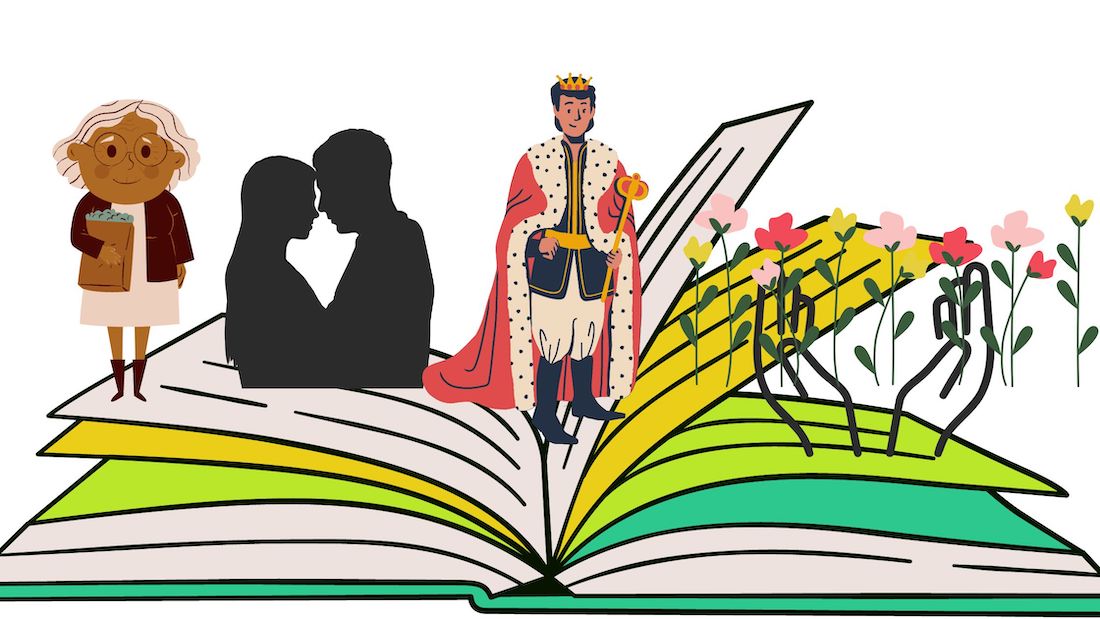
The majority of submissions during the previous Chinese Writing Contests were short stories. While some were exceptionally good, some were really confusing. I hope that 2025 could be a little bit better, with more of the former and less of the latter.
This is the reason that we’re going to talk a little bit about the 4C in story telling. I’ll use some best entries from previous years to illustrate.
Good story telling skills are crucial. Unfortunately, or fortunately, there isn’t any universal standard for all writers. It’s an art that is worth developing over a long period of time.
For all aspiring writers, the best way to improve story telling skills is to examine some common traits of good stories and try to use them in our own writings.
In this article, we’ll use the concept of 4C to look at four stories that are published in the Easy-to-Read Chinese Short Stories series, which include best entries of all previous Chinese Writing Contests. (Find out more about these books here: https://mslmaster.com/index.php/chinese-textbooks/easy-to-read-series )
4C is a good starting point to think about your story if you’re currently writing one for this year’s Chinese Writing Contest. It refers to Causality, Conflict, Complications, and Characters.
We’ll take a look at them one by one.
- Causality
It means that, in your story, you write clearly on how one event leads to the next, and to the next.
One example is Why Do Small Things? (Included in Easy-to-Read Chinese Short Stories, Book 2 and written by Jasmine Wang).
This story starts with an elder lady who got some help with her bag. This leads to the next event that she gave some delicious snack to a worker. This leads to the next event that the worker witnessed a beautiful sunset. The story went on and ended with a happy family dinner.
Another example is Those Little Things about Men and Women (Included in Easy-to-Read Chinese Short Stories, Book 3 and written by Sonia Vlasova-Kuznetsova).
This story nicely captures subtle changes of sentiments among four people through a series of mini episodes, all started with looking for someone to play tennis with.
The example from the 2024 best entries is Lanlan’s New Raincoat (Included in Easy-to-Read Chinese Short Stories, Book 4 and written by Janine R. Lutchman).
This story follows Lanlan’s actions and moods and tells us how inter-related events unfold one after another.
The lesson here is to think about your story, how one event triggers the next, and the next.
- Conflict
It means that, in your story, there is a goal that seems difficult to reach for your characters. And this conflict must be resolved in one way or anther.
One example is White Horse (Included in Easy-to-Read Chinese Short Stories, Book 1 and written by Joshua Twilley).
In this story, a family faces an existential threat of a sudden climate change. This conflict is resolved by the family following their beloved horse, itself a representation of nature.
Another example is Wait (Included in Easy-to-Read Chinese Short Stories, Book 2 and written by James Kennedy).
In this story, a young man and a young woman were in love and wanted to spend the rest of their lives together. But their families viewed each other as enemies and they didn’t approve their relationship. This is the conflict.
As we read the story, we want to find out whether or not the conflict was resolved and how. (By the way, James really wowed his readers in the end.)
The takeaway is to think about your story, what is the major conflict? And what is the dire consequence if it is not resolved?
- Complications
It means that, in your story, there are a number of obstacles that make things complicated.
One example is Three Lives (Included in Easy-to-Read Chinese Short Stories, Book 1 and written by Trista Wang).
In this story, really a mini play, two people love each other but their love faces constant obstacles.
Another example is The Day Nothing Became the Best Thing (Included in Easy-to-Read Chinese Short Stories, Book 2 and written by Gregory DuQuella MD).
In this story, the entire family wanted to impress their King. But one by one, they failed, until Xiao Ming who showed the King a different side of life.
Therefore, think about your story, how many obstacles are there for your characters to overcome?
- Characters
It means that, in your a story, you need your characters to be alive and convincing. There are many ways to do this.
One of them is to reveal their innermost feelings.
For example, A Dream of Achievement (Included in Easy-to-Read Chinese Short Stories, Book 1 and written by Toh Jun Tian).
In this story, the author used an inner torrent of emotions to help readers understand the central character’s struggles and wishes, dreams and realities.
Another one is to show your characters in action.
For example, Mother’s Flowers (Included in Easy-to-Read Chinese Short Stories, Book 2 and written by Gale Lichter).
In this story, the mother handmade many flowers to cheer her daughter up. Mother’s loving heart became self evident through her action - making flowers.
Also in the 2024 best entries, Birthday (included in Easy-to-Read Chinese Short Stories, Book 4 and written by Jason Chen).
The main character shares his loss, helpless and loneliness before friendship melts the winter he has enclosed himself into.
The message for you is, think about your characters, how can you give your characters dimensions and personalities?
*** ***
These 4Cs are not exclusive to one another. We can spot at least two, if not all of them, in a good story. So, don’t limit yourself to just one when you craft your own style of writing.
I hope you find this article helpful, and start using the concept of 4C to ultimately delight your readers this year!
About the Author

April Zhang
April Zhang is the founder of MSL Master and she enjoys teaching and interacting with students. She constantly explores new and interesting ways of teaching Chinese through creative and imaginative activities.
With her help, many students have achieved outstanding result, which has enriched their understanding about China and has significantly contributed to their work.